

South Kivu : at least 500 Burundian refugees benefit from aid to start an agro-pastoral activity
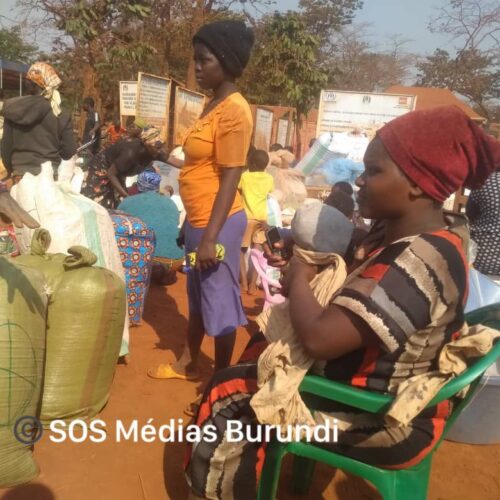
These are people gathered in credit and savings cooperatives in the camps of Mulongwe and Lusenda in the province of South Kivu in the east of the Democratic Republic of Congo. The concerned have just benefited from financial support
to start breeding activities on the part of the UGEAFI NGO. INFO SOS Médias Burundi
It is thanks to the Union of study and action groups for the development of Fizi-Itombwe (UGEAFI) that some refugees received food products while others received goats worth 100 dollars each.
This is the case of Jonathan, a member of a savings and credit organization, which has 20 members. He received $100 in aid which he says will help alleviate poverty in the Lusenda camp where he lives.
Joselyne Nizigiyimana, mother of 7 children, beneficiary of a capital of flour equivalent to $100, feels ready to start trading.
UGEAFI management reports supporting members of 340 deposit and credit associations in Lusenda and 160 in Mulongwe.
By 2021, this organization had already provided capital to 1,500 members of 75 savings and loan groups in Lusenda and Mulongwe.
The Lusenda camp is home to more than 26,000 Burundian refugees while the Mulongwe camp is home to more than 8,000, according to the UNHCR and the National Commission for Refugees.
You might also like

Kirundo: more than 900 repatriated schoolchildren have dropped out of school
The figures were unveiled last week during a visit by the Burundian Prime Minister to the province of Kirundo (Northern Burundi). Gervais Ndirakobuca ordered school officials in the province to

Nyarugusu : World Vision halts food aid in the face of unfair exclusions
SOS Médias Burundi Nyarugusu, March 15, 2026 — The distribution of food aid to Burundian refugees in the Nyarugusu camp in Tanzania was suspended Tuesday by the NGO World Vision

Nyarugusu (Tanzania) : Massive repatriation of refugees resumes
More than 250 households were repatriated on Thursday, a first in over a year. Some refugees say that “we have no other choice”, blaming the untenable conditions in the Nyarugusu