

Violent explosions in Musaga : a night of terror shrouded in mystery and unanswered questions
SOS Médias Burundi
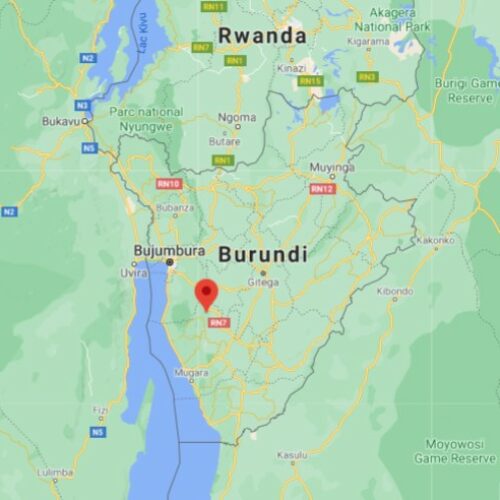
Bujumbura, April 1, 2026 — Residents of the Musaga zone, located in the south of the commercial capital of the small east African nation, experienced a night of rare violence, marked by a series of explosions at a military camp between Tuesday, March 31, and Wednesday, April 1, 2026, plunging several neighborhoods into fear, confusion, and profound uncertainty. In the midst of this chaotic night, families were separated, children went missing before being found, and an entire population remained dependent on sparse and contradictory information.
Shortly after nightfall, powerful detonations shook the city. The explosions, which continued for several hours, were heard in many neighborhoods of Bujumbura, sowing panic among the residents.
Fear quickly took hold. Awakened with a start, dozens of families fled their homes in the darkness, some barefoot, abandoning their belongings. In the confusion, several families were separated, and children were lost from sight, intensifying the general anxiety. Some residents, believing it to be an attack or an attempted coup, sought refuge far from their neighborhoods.
On social media and WhatsApp groups, messages multiplied at a frantic pace, mixing rumors, calls for help, and attempts to understand the situation.
At daybreak, a fragile calm settled in. But the fear did not dissipate. The streets, usually bustling, remained unusually deserted. Residents, still in shock, first tried to find their loved ones before daring to inspect their homes.
Several children who had gone missing at the height of the panic were found on Wednesday, bringing some relief to grieving families.
Initial assessments revealed significant damage : shell casings scattered in the streets and on properties, collapsed ceilings, shattered windows, and damaged vehicles. The neighborhoods of Musaga, Gasekebuye, Kanyosha, Kinindo, Kibenga, Gihosha, as well as Mutanga North and South and Kinanira, were among the hardest hit.
According to the spokesperson for the Burundian army, Brigadier General Gaspard Baratuza, the provisional death toll stands at at least 13, all civilians, and 57 wounded, including 3 soldiers. However, other unconfirmed sources suggest a much higher toll, around 80 dead, fueling doubts about the true extent of the tragedy.
In the hours that followed, a persistent lack of clarity surrounded the management of information. Spokespeople for the army and police did not immediately comment publicly, while the governor of Bujumbura, Major General Aloys Ndayikengurukiye, indicated that he was awaiting consolidated reports before making any detailed statements.
On the ground, the situation remained tense and difficult to access. According to several consistent accounts, the few journalists who attempted to cover the events were prevented from working. Members of the Imbonerakure, affiliated with the youth wing of the ruling CNDD-FDD party, were seen dispersing reporters and cleaning up the area, collecting debris throughout the night and morning, helping to erase some traces of the explosions.
According to initial explanations from the authorities, the disaster was linked to an internal incident that caused a fire in an ammunition depot. This official version cites, in particular, a technical malfunction.
However, this explanation is far from being universally accepted. Former soldiers and people who had worked in stock management, who spoke to SOS Médias Burundi, disputed this version of events. According to them, this type of depot is not electrified. Other hypotheses are circulating, including suggestions of a sophisticated attack or a more complex incident, without official confirmation. A resident claims to have seen “something descend like a flash” just before the explosions.
The dispersal of explosive devices into remote neighborhoods has also fueled speculation, although military sources attribute this to the power of the blasts.
According to several unconfirmed reports, the destroyed stockpile could be strategic, containing munitions recently delivered for military operations in eastern DRC, where the Burundian army is engaged. Military sources confirmed that the stockpile contained new equipment that had just been received, without providing many details.
Army spokesman Brigadier General Baratuza downplayed the impact during a press briefing Wednesday evening :
“This is just one stockpile; the stockpiles at other camps are in good condition. Burundians can rest assured, we have sufficient resources to protect ourselves against the enemy. It is a significant loss, but it does not affect our defense capabilities.”
Reporters from SOS Médias Burundi saw dozens of brand-new jeeps being evacuated from Camp Base after the explosions at the FDNB (Burundi National Defense Force) headquarters. Other vehicles were reportedly burned out.
On the issue of compensation, General Baratuza indicated that the Burundian army was not prepared to compensate the families, citing homes built within a military perimeter and blaming former urban planning officials who had allocated plots of land within that area. However, some victims were not near the affected camp or were hit while in their cells at Bujumbura’s central prison, known as Mpimba, located only 100 to 150 meters from the camp where the explosions originated. No information was provided about these victims.
Faced with these scenes of destruction, the fear of further explosions quickly took hold. “It’s true that our house was hit, but we thank God that we survived, because the explosions really shook us,” said a resident, still visibly shaken.
In the morning, residents, supported by law enforcement, began clearing the rubble and securing the area. Operations to collect unexploded ordnance were carried out to prevent any further danger.
Burundian authorities, including the army, the police, and President Évariste Ndayishimiye, called for calm, assuring the public that the situation was under control. In a message posted on social media, the head of state expressed his gratitude for the expressions of solidarity while attempting to reassure the population.
But despite these appeals, concerns persist. Between a disputed official account, incomplete communication, and limited access to information, many questions remain unanswered regarding the exact cause of the explosions, the true extent of the casualties, and potential responsibility.
Faced with the scale of the losses and material damage, the affected families are making an urgent appeal to the authorities for emergency assistance, both for the care of the injured and for the reconstruction of destroyed homes.
You might also like
Rutovu: an Imbonerakure injured with a machete by his colleague
Ernest Kwizera, an Imbonerakure (member of the CNDD-FDD youth league) was injured on Thursday by Innocent Ndayisenga, also a member of the same league. The incident took place in the

Ituri: a dozen civilians including children abducted
Unidentified gunmen abducted twelve people, including seven schoolchildren. The incident took place on Monday in the village of Bukiringi in the chiefdom of Walendu Bindi in the territory of Irumu


Bujumbura : a woman found dead on the shores of Lake Tanganyika
SOS Médias Burundi Bujumbura, November 3, 2025 — The lifeless body of 48-year-old Appolonie Ndayisaba, from Gihinga village, Nyabihanga district, Gitega Province, was found on Sunday on the shores of