
Malawi: more than 400 refugees from the Great Lakes region arrested by the police
Hundreds of Rwandan, Burundian and Congolese refugees, some running illegal businesses, have been arrested in Lilongwe and other towns across the country after refusing to return to Dzaleka refugee camp, the only one the landlocked nation has of south-eastern Africa. INFO SOS Médias Burundi
The ministry in charge of internal security specified on the national radio-television that more than 400 refugees and asylum seekers, including children, were arrested as part of a police operation launched two weeks ago in several districts of the capital Lilongwe.
These arrests come two months after an ultimatum issued by the government for these refugees to return to the overcrowded camp of Dzaleka, about forty kilometers from Lilongwe.
“The allowed time expired. We had indicated that if these people did not move, the police would be called to intervene to force them to do so,” said a spokesman for the said ministry.
Most refugees and asylum seekers in Malawi come from the Democratic Republic of Congo (DRC), troubled by conflict and violence, as well as Rwanda and Burundi.
Some members of the Burundian community in Lilongwe speak of astonishment at the government’s commitment to protecting refugees.
“These arrests are a flagrant violation of international refugee law and foster an environment of fear and uncertainty for those affected. And then, refugees who return to the camp are not allowed to resume their business here, they are also stripped of all their property either by the police or by citizens who are dissatisfied and jealous of the trade we are doing,” denounced refugees from the camp of Dzaleka, who confided in SOS Medias Burundi.
This is when since the beginning of this month, many refugees who had been living in Malawi’s cities began to return to Dzaleka camp, wanting to comply with the government’s ultimatum to leave urban centers. As a result, the camp finds itself overwhelmed.
Refugees say they are in conflict with domestic traders who have long threatened to forcibly evict refugees from market areas, claiming they are introducing unfair price competition.
Dzaleka is home to refugees and asylum seekers from Burundi, Democratic Republic of Congo, Ethiopia, Rwanda and Somalia.
The camp was supposed to house around ten thousand refugees, but now houses more than fifty thousand. And the refugees who lived in the cities are estimated at half of those who are settled in this camp.
UNHCR has asked the Malawian authorities to suspend this decision to avoid overcrowding in the camp, which already contains more than five times its capacity.
The UN refugee agency also estimates that many children could drop out of school, while many traders who are already supporting themselves would be forced to return to the camp where they will no longer rely on assistance.
Malawi has nearly 70,000 refugees and asylum seekers, according to UNHCR.
You might also like

Beni : the civil society warns of the slackening of joint FARDC-UPDF operations
The bureau of the civil society Forces Vives of the Rwenzori sector in Beni territory in North Kivu in eastern DRC warns of the slackening of joint operations by the
Tanzania : when the authorities turn religious leaders into instruments of forced repatriation
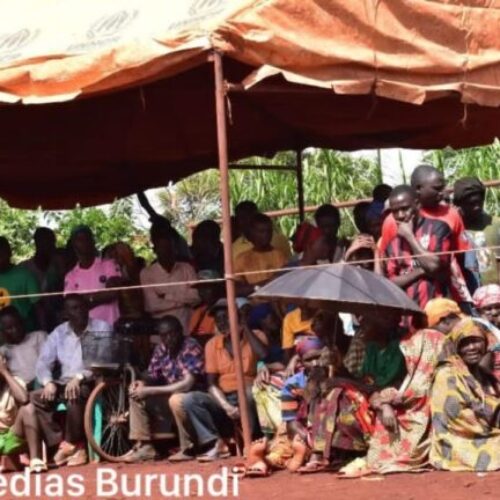
SOS Médias Burundi Kigoma, September 24, 2025 – From Nduta to Nyarugusu, pastors, leaders of religious movements, and sheikhs were ordered to actively participate in raising awareness among Burundian refugees


Nduta (Tanzania) : MSF accuses authorities of forced repatriations and serious violations of the rights of Burundian refugees
SOS Médias Burundi Kigoma, January 29, 2026 – Doctors Without Borders (MSF), an NGO active in the health sector in refugee camps in Tanzania, is raising the alarm about what